The murder of Wendy Ladner-Beaudry last April touched so many people in this city. I was one of them. Even though I’ve written about her brother, Peter, for years in his role in civic politics, I never met Wendy.
But I felt compelled to try to tell her story in a little more depth, which I did for my regular feature in Vancouver magazine.
The brutal murder of Wendy Ladner-Beaudry on April 3, 2009, sent shockwaves through Vancouver that continue reverberating fifteen years later. Her death represented more than just another tragic crime—it shattered the sense of security that countless West Side mothers had found in their daily runs through Pacific Spirit Park, and illuminated the remarkable life of a woman who embodied Vancouver’s active, community-minded spirit.
At 53, Wendy was entering what should have been a liberating new phase of life. After two decades of intensive mothering—shuttling daughters Maya and Jenna to swim practices, ski races, and school activities—she was finally glimpsing the freedom that would come as her children approached independence. Maya was studying at university in Montreal, Jenna was finishing high school, and Wendy was building a meaningful career working with organizations that promoted physical activity, particularly through her role as CEO of KidSport Canada.
Her work reflected her deepest values: ensuring that children from low-income families had access to sports and physical activity. She had recently been developing programs with women at food banks in Vancouver and Burnaby, understanding intuitively that getting mothers active would translate to more physical activity for their children. It was typical of Wendy’s approach—seeing connections others missed, building bridges between communities, always working toward the greater good.
The small bungalow she shared with husband Michel Beaudry near the Musqueam reserve had been her sanctuary and laboratory for creating the kind of life she believed in. She’d bought it with her brother Steve when they were in their twenties, gradually becoming sole owner as she transformed it according to Christopher Alexander’s “A Pattern Language,” the 1960s architectural philosophy that emphasized human-scale, community-connected living.
Wendy belonged to that pioneering generation of women who, liberated from traditional roles, expressed their new freedom through physical pursuits—cycling, skiing, triathlons, hiking, and especially running. She’d started running more than thirty years earlier with friend Celia Plottel, leaving their babies at Dunbar Community Centre to head into the University Endowment Lands. For hundreds of women, those woods became their outlet during the intensive family years.
Her social world reflected her generous spirit and gift for connection. She maintained overlapping circles of family and friends who played and vacationed together—the large Ladner family gathering every August long weekend on Pasley Island, high school friends from Crofton House and York House with their own Pasley weekends, and the “ladies” who gathered at the Nelson Island cabin she and Michel owned with World Cup skier Rob Boyd and his wife.
Physical play bonded these relationships, but so did Wendy’s fierce sense of justice. Friends remember her willingness to challenge wrongdoing, whether someone littering or breaking into a car—she “would have done her civic duty,” as friend Sandra Stevenson put it. This moral courage made some wonder later whether it might have played a role in her death.
The marriage between Wendy and Michel represented a compelling partnership of opposites. She was the steady pillar; he was the perpetual adventurer, a writer covering extreme sports who consulted at Whistler and around the world. Yet they shared a “grown-up hippie” philosophy about living a good life in every sense, supported by Wendy’s modest inheritance from her lawyer father and Michel’s sporadic but sufficient income from writing and consulting.
By 2009, their life was shifting. Michel, facing double knee replacement surgery after four decades of extreme sports, knew his adventuring days were numbered. Wendy had completed a master’s degree in education at UBC in her late forties and was eager to contribute more financially as the family entered this new phase. She was looking forward to having the kind of time together they’d enjoyed at the start of their marriage.
The circumstances of her death remain one of Vancouver’s most perplexing unsolved murders. On that April afternoon, she’d spent the morning working on her computer, sending her last email at 12:48 p.m. She called a friend twice looking for a running partner but, receiving no response, apparently decided to run alone—something she’d done countless times before in Pacific Spirit Park.
When Michel called from Whistler at 2:30 p.m., he reached only her voicemail. By 3:30, daughter Jenna was complaining that mom hadn’t picked her up from swim practice and that the house alarm wasn’t set—highly unusual for security-conscious Wendy. Driving home with growing dread, Michel saw police tape from blocks away. “I knew when I saw the tape, I knew it was Wendy,” he later said. “I knew she was dead.”
The location made the crime particularly shocking. The attack occurred on a well-used path within sight of residential streets, where electronic counters showed thirteen people per hour typically passed—one every four or five minutes. It was a lovely spring afternoon when most people felt safe in Vancouver’s parks.
The investigation revealed the randomness that made the crime so terrifying. Police found no evidence of sexual assault, robbery, or personal vendetta. Her husband was quickly ruled out as a suspect, despite cruel internet speculation that plagued the family during their grief.
Sixteen years later, the RCMP continues seeking information, though they’ve never announced a significant break in the case. The mystery endures not just because of investigative challenges, but because Wendy represented something precious—a woman who embodied community engagement, environmental consciousness, and social justice, living the kind of active, principled life Vancouver celebrates.
Her death marked more than personal tragedy; it represented the loss of someone who made her community stronger through countless small acts of connection and care. In a city often criticized for its social atomization, Wendy Ladner-Beaudry had mastered the art of bringing people together, building networks that spanned generations and social boundaries.
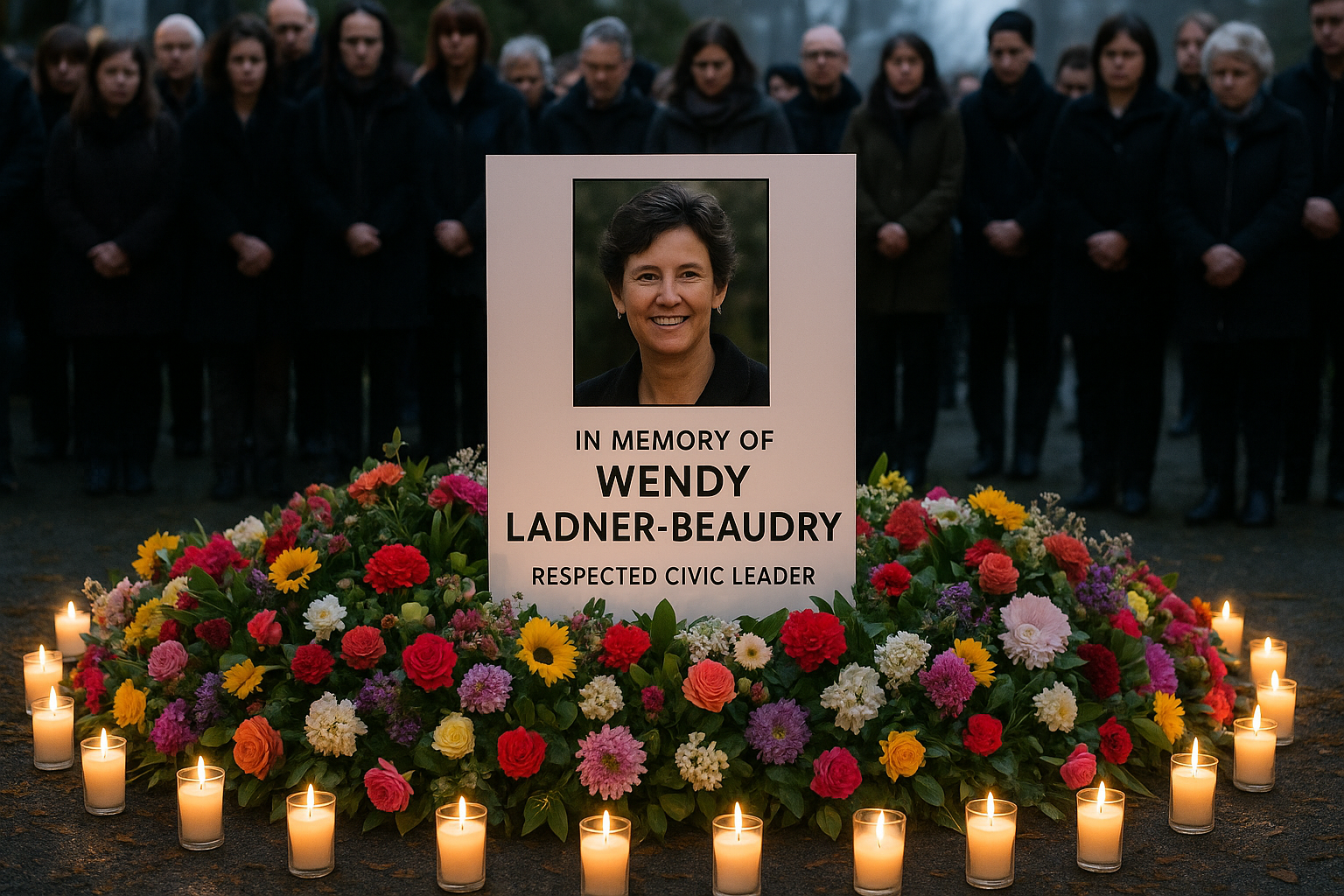
The memorial plaque installed in her honor at Kerrisdale Community Centre, funded by “her family, her friends, and the Kerrisdale Community Centre Society,” captures her essence: “In memory of Wendy Ladner-Beaudry, who relished a good game with friends.” It’s a fitting tribute to someone whose final act—like so many before it—was simply trying to stay healthy and active in the parks and trails she loved.