
Every time I hear about some crazy price paid for a piece of developable land in the city, it is superseded a few months later by an even crazier price.
The latest was the $46 million paid for 950 West Broadway by someone who appears to be a newbie buyer/developer in town, which was even higher per buildable square foot than the price the Pappajohns paid for the Denny’s site at Broadway and Hemlock. And that was higher than the price someone paid for the Mercedes-Benz site a few years ago. Et cetera. All part of the sudden attraction of Broadway for buyers, as everyone awaits the new transit line.
The Unremarkable Building That Broke Records
The property at 950 West Broadway exemplifies how transit speculation has turned the most mundane real estate into gold mines. This two-storey concrete structure, home to an IHOP, a Japanese restaurant, and a handful of other small businesses, would barely merit a second glance from passersby. Built in an era when Broadway was simply a busy arterial street rather than a future transit corridor, the building possesses none of the architectural distinction or prime retail frontage that typically commands premium prices.
Yet this utterly ordinary structure commanded an extraordinary price that reflects not its current state, but its future potential. The buyer, reportedly new to Vancouver’s development scene, was betting on the transformative power of rapid transit to remake the entire Broadway corridor. At approximately $1,150 per buildable square foot, the purchase price established a new benchmark that sent shockwaves through the commercial real estate community.
The Pappajohn Precedent
The sale followed closely on the heels of developer Tony Pappajohn’s $26.25 million acquisition of the Denny’s site at 1296 West Broadway and Hemlock Street. That transaction, completed earlier in 2016, had already raised eyebrows for its aggressive pricing on what many considered a modest fast-food location. The Pappajohn purchase worked out to roughly $1,000 per buildable square foot, establishing what seemed at the time to be an unsustainable ceiling for Broadway properties.
The Denny’s site, with its larger footprint and prominent corner location, at least offered obvious redevelopment advantages. The property’s visibility and size made it an attractive candidate for the kind of mixed-use tower that planners envisioned along the future transit corridor. Pappajohn’s track record as a local developer also lent credibility to the purchase, suggesting calculated risk rather than speculative frenzy.
The Mercedes-Benz Milestone
Both recent sales dwarfed the previous record-holder: the Mercedes-Benz dealership site that had sold a few years earlier for what then seemed like an astronomical sum. That transaction, while substantial, now appears almost conservative compared to the current market dynamics. The pattern reveals how each sale has reset expectations, creating a ratcheting effect that drives prices ever higher.
The Mercedes-Benz site, located further east on Broadway, had the advantage of existing commercial zoning and established automotive retail presence. Its sale represented the beginning of serious speculative interest in Broadway properties, but the pricing still bore some relationship to traditional valuation metrics. The subsequent sales have increasingly divorced themselves from conventional real estate fundamentals.
Transit-Driven Transformation
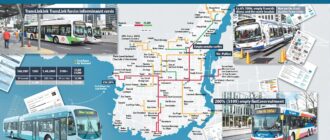
The catalyst for this land rush is the planned Broadway Subway extension, officially known as the Millennium Line Broadway Extension. This 5.7-kilometer underground line will connect VCC-Clark Station to Arbutus Street, with six new stations transforming accessibility along one of Vancouver’s busiest commercial corridors. The project, expected to open in 2025, promises to fundamentally alter the development potential of every property within walking distance of the stations.
Broadway currently handles over 100,000 transit trips daily, making it one of North America’s busiest bus corridors. The conversion to rapid transit will dramatically improve travel times and capacity, making Broadway properties far more attractive for high-density residential and commercial development. Properties that currently struggle with parking constraints and traffic congestion will suddenly enjoy premium transit access.
The Speculation Premium
What makes these sales particularly remarkable is how divorced they’ve become from current income-generating potential. The IHOP and small businesses occupying 950 West Broadway generate rental income that could never justify a $46 million purchase price using traditional investment metrics. The buyers are essentially purchasing development rights and transit access, with current operations serving merely as temporary placeholders.
This speculative premium reflects broader changes in Vancouver’s development landscape. International capital, local developers, and investment groups are all competing for scarce developable land, driving prices to levels that would have been unimaginable just a few years ago. The Broadway corridor, with its transit promise and central location, has become ground zero for this competition.
Market Psychology and Price Discovery
Each record-breaking sale creates a new psychological floor for subsequent transactions. Sellers who might have accepted lower offers now hold out for prices that reflect the latest comparable sales. Buyers, meanwhile, justify ever-higher bids based on the assumption that transit infrastructure will generate sufficient returns to validate today’s prices.
The result is a feedback loop where each transaction validates and amplifies the next. Properties that sold for $400 per buildable square foot now seem like bargains compared to purchases exceeding $1,000 per square foot. This dynamic has created what economists recognize as classic speculative behavior, where prices become untethered from underlying economic fundamentals.
The Risk Factor
The fundamental risk in this land rush lies in the gap between current prices and the uncertain timeline for realizing development potential. While the Broadway Subway is officially planned and funded, Vancouver’s development approval process remains lengthy and unpredictable. Zoning changes, community consultation, and construction timelines all introduce variables that could affect investment returns.
Moreover, the market assumes continued demand for high-density housing and commercial space along the transit corridor. Economic downturns, policy changes, or shifts in urban preferences could significantly impact the value of these speculative investments.
It’s all kinda nuts, as is everything in Vancouver these days, and I have the luck to record it for posterity.
This observation captures the broader incredulity many longtime residents feel watching their city’s real estate market defy conventional logic. The Broadway land rush represents just one facet of Vancouver’s transformation from a relatively affordable West Coast city into one of the world’s most expensive real estate markets. Each record-breaking sale adds another chapter to this ongoing story of speculation, development, and urban change that continues to reshape the city’s physical and economic landscape.