


Introduction: A colonial gem on the Pacific Coast
Victoria, the provincial capital of British Columbia, often referred to as Canada’s most “British” city, is an amazing example of the preservation and adaptation of Victorian architecture outside of the United Kingdom. Located on the southern tip of Vancouver Island, the city’s stately buildings, graceful mansions and manicured gardens transport visitors back to the era of British imperial expansion and colonial influence in the late 19th century.
Victoria’s history began in 1843 when the Hudson’s Bay Company established a trading post here, named Fort Victoria in honor of the then young Queen of the British Empire. With the discovery of gold in 1858 in the lower Fraser River, the settlement began to grow rapidly, becoming an important center of British colonial possessions on the west coast of North America. In 1862 Victoria became the capital of the colony of British Columbia, and later retained its status as the capital in 1871 when the province became part of Canadian Confederation.
This period of rapid growth and prosperity shaped the architectural character of the city, which has largely survived to this day. Victorian architecture, which prevailed during the reign of Queen Victoria (1837-1901), became the dominant style in the city named in her honor. Today, Victoria is proud of its British heritage and is one of the best examples of colonial architectural preservation in North America.
In this article, we will take an in-depth look at Victoria’s Victorian architecture features, its historical development, key architectural landmarks, and modern efforts to preserve this unique heritage for future generations.
Victoria’s historical development: from fort to colonial capital
The history of the City of Victoria is closely intertwined with the history of British colonization of the west coast of North America. The founding of Fort Victoria in 1843 by James Douglas, a major factor in the Hudson’s Bay Company, was the first step in establishing a permanent British presence in the region.
The fort was originally a small fortified settlement intended for the fur trade with the local indigenous population. However, the fort’s strategic location on the southern tip of Vancouver Island, with a beautiful natural harbor, quickly made it an important trading and military post. The first buildings were simple and functional, designed in a style typical of the Hudson’s Bay Company’s trading forts.
The real boom in Victoria’s development came in 1858 with the onset of the Fraser River gold rush. The city’s population increased dramatically as thousands of gold prospectors used Victoria as a starting point to travel to the gold deposits. During this period, construction began in earnest and the city quickly expanded beyond the original fortifications.
In 1862, Victoria was officially designated the capital of the colony of British Columbia, which led to the construction of government buildings and further development of the city’s infrastructure. In 1866, the unification of the colonies of British Columbia and Vancouver occurred, with Victoria as the capital of the combined colony.
An important milestone in the city’s development was the incorporation of British Columbia into Canadian Confederation in 1871. This event provided stability and led to a new round of economic growth. By the end of the 19th century, Victoria had become a thriving colonial city with a population of about 20,000.
During this period, the architectural shape of the city we see today was formed. Wealthy businessmen, officials and military officers of British origin built mansions and mansions in popular British architectural styles, among which the Victorian style dominates in all its variety.
What is Victorian architecture?
Before delving into the specifics of Victorian architecture in Victoria, it is important to understand what Victorian architecture is in general. The term refers not so much to a particular architectural style, but to the period of Queen Victoria’s reign in the UK from 1837 to 1901.
Victorian architecture encompasses many styles that were popular during this 64-year period. These include: early Gothic Revival, Folk Victorian, Greek Revival, Italianate style, Second Empire style, Stick style, Romanesque Revival, Shingle style, Colonial Revival, and the popular Queen Anne style that emerged towards the end of the era.
The period of Victorian architecture coincided with the Industrial Revolution, which had a significant impact on building technology and materials. The large-scale production of building elements such as bricks, tiles, decorative details in cast iron and glass allowed for more elaborate and ornamented designs that were accessible not only to the elite but also to the middle class.
Characteristic features of Victorian architecture are:
- Ornate and decorative – Victorian buildings were characterized by an abundance of decorative elements, carvings, moldings, and other ornamental details.
- Asymmetrical forms – unlike previous architectural styles, Victorian buildings often had asymmetrical facades.
- High roofs with steeply pitched roofs – this not only created additional space on the upper floors, but also gave the buildings an upward thrust.
- Turrets and domes – many Victorian buildings were adorned with decorative turrets, domes and spires.
- Baywindows and projecting features – large bay windows, projecting balconies and porches were characteristic of many Victorian styles.
- Variegated color ing – bright and contrasting colors were often used to highlight architectural elements.
- Large porches – spacious porches, often girdling a building on two or three sides, were particularly popular in Victorian homes in North America.
- Decorative windows – Stained glass windows, unusually shaped windows, including round, oval, or polygonal windows, were common in Victorian architecture.
The interiors of Victorian buildings also showed distinctive features:
- Complex layouts – houses had numerous special purpose rooms: drawing rooms, libraries, smoking rooms, boudoirs, etc.
- High ceilings – typical Victorian interiors featured ceilings from 3 to 4 meters high.
- Rich woodwork – carved panels, cornices, dark wood door and window frames.
- Decorative fireplaces – fireplaces with elaborate marble or wooden mantels were the centerpieces of many rooms.
- Stained glasswindows – colored glass was used not only in church architecture but also in residential homes.
- Abundant furniture and decor – Victorian interiors were full of furniture, rugs, draperies, paintings, and decorative objects.
Victorian architecture spread far beyond Britain, reaching all corners of the British Empire and other countries. In colonial settlements such as Victoria in British Columbia, architectural styles adapted to local conditions, available materials, and climate, while retaining the essential features of British examples.
British influence and architectural heritage in Victoria
The British influence on Victoria’s architecture has been dominant and pervasive. Most of the city’s early settlers were from Britain, and they sought to recreate the atmosphere of their native country in their new colonial possessions. Architecture became one of the main ways in which this cultural identity was manifested.
Unlike many other Canadian cities where French and American influences were significant, Victoria retained an almost exclusively British architectural character, especially during its formative period in the second half of the nineteenth century. Several factors contributed to this:
- Geographic isolation – its location on an island and distance from the east coast of Canada and the United States limited cultural influences from other regions.
- Population composition – most residents were British subjects, many of whom were middle and upper class.
- Political position – the colony’s capital status emphasized the importance of maintaining British traditions and ways of life.
- Economic ties – close trade ties with Great Britain provided access to British goods, including architectural catalogs, decorative elements, and even the services of British architects.
Victoria’s architectural heritage can be divided into several categories, reflecting different aspects of British influence:
Government and Public Buildings
Victoria’s public buildings were designed to demonstrate the power and stability of British colonial authority. They were often built in monumental styles such as Neo-Renaissance or Neo-Gothic, using sturdy materials and stately proportions.
The most notable example is the British Columbia Legislative Assembly Building, designed by architect Francis Rathenbury and built between 1897 and 1898. It is an impressive complex in a style that can be characterized as “Free Classical” or “Romanesque”. The building is made from local materials including granite, sandstone and slate, but its architectural design follows late Victorian British patterns.
Commercial buildings and hotels
Numerous Victorian-style buildings reflecting British commercial traditions were constructed in Victoria’s commercial center, particularly in the harbor area and on the main streets. These buildings often combined retail space on the first floor with residential or office space on the upper floors.
The famous Fairmont Empress Hotel (originally known simply as the Empress Hotel) was built for the Canadian Pacific Railway in 1904-1908, also designed by Francis Rathenbury. This grand chateau style hotel with its stately facade, steep roofs and decorative features is a fine example of late Victorian influence and early Edwardian era.
Residential Architecture
Victorian dwellings, from modest cottages to luxurious mansions, also reflected the diversity of British Victorian styles. Depending on the status and wealth of the owners, houses ranged from simple wooden structures with minimal decoration to elaborate architectural compositions with towers, bay windows, and lavish ornamentation.
Particularly notable are the residential neighborhoods of James Bay and Fairfield, where entire streets of Victorian houses of various styles and sizes remain. Luxury mansions were often built in more open suburban areas such as Rockland, where the famous Craigdarroch Castle was built.
Religious buildings
Victoria’s churches also followed British architectural traditions, especially the neo-Gothic style, which was the dominant style for religious buildings in the Victorian era. Christ Church Cathedral, although completed after the Victorian era (in 1929), was designed in the neo-Gothic style characteristic of nineteenth-century British churches.
Parks and garden art
The British influence was evident not only in the architecture of buildings, but also in the organization of urban spaces. Beacon Hill Park, laid out in 1882, was designed in the tradition of English landscape parks, with winding paths, decorative bridges and elaborate viewpoints.
Many private houses in Victoria are surrounded by English-style gardens, with characteristic elements such as hedges, rose gardens and neat lawns. Victoria’s mild and humid climate favored the creation of such gardens, further enhancing the impression of “Little England” on Canada’s west coast.
Key Examples of Victorian Architecture in Victoria
1. British Columbia Legislative Assembly Building
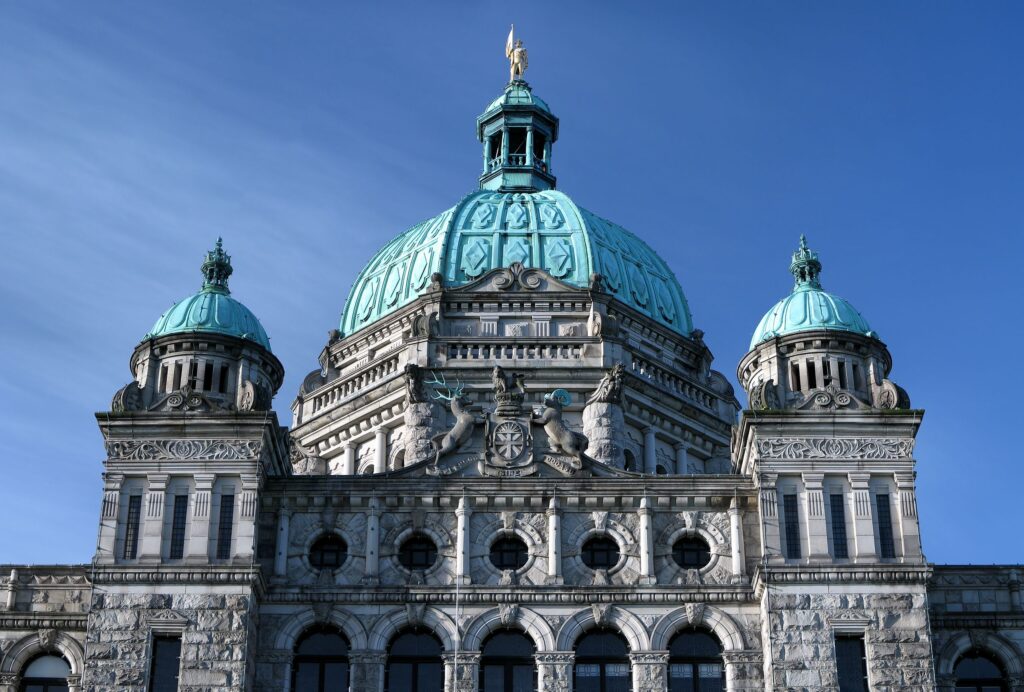
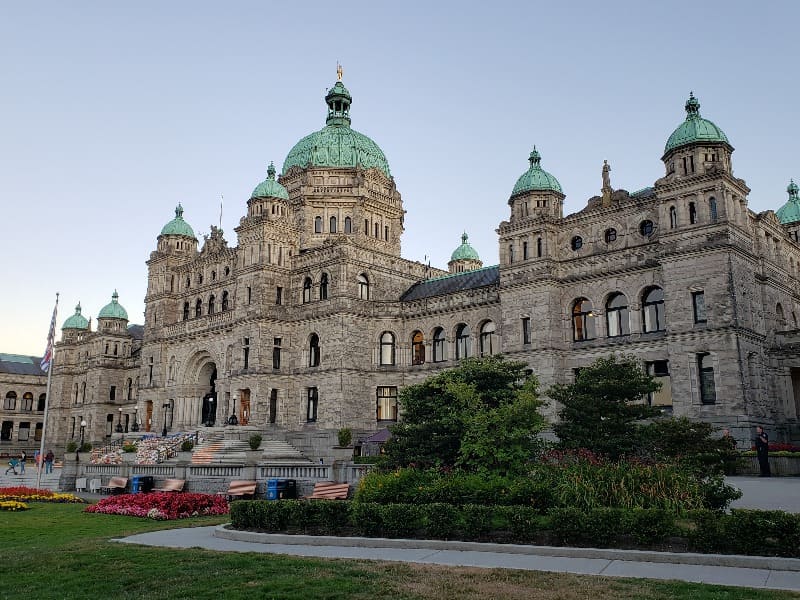
The British Columbia Legislative Assembly Building is one of the most impressive examples of Victorian architecture in the city. Built between 1893 and 1898 and designed by architect Francis Rathenbury, the structure is a magnificent example of the Neo-Renaissance style with Romanesque Revival elements.
Francis Mowley Rathenbury (1867-1935) was a young British architect who won a competition to design a new parliament building in 1892, shortly after his arrival in Canada. This project was his first major success and laid the foundation for a brilliant career in British Columbia.
The building was constructed with local materials: anorthosite granite from quarries on the lower Jervis River, gray breccia and sandstone from Haddington Island, and blue and black slate from Jervis and Nitinat Islands. Despite the use of local materials, the architectural design is fully in keeping with late Victorian British traditions.
The facade of the building is decorated with many decorative elements, including columns, pilasters, bas-reliefs and statues. The central dome is over 30 meters high and is topped with a gilded statue of Captain George Vancouver. The interiors of the building are equally impressive, with marble floors, stained glass windows and carved wood paneling.
The building looks especially beautiful in the evening when its contours are illuminated with thousands of bulbs, a tradition that dates back to 1897 when the building was first illuminated in honor of Queen Victoria’s Diamond Jubilee.
2. Fairmont Empress Hotel
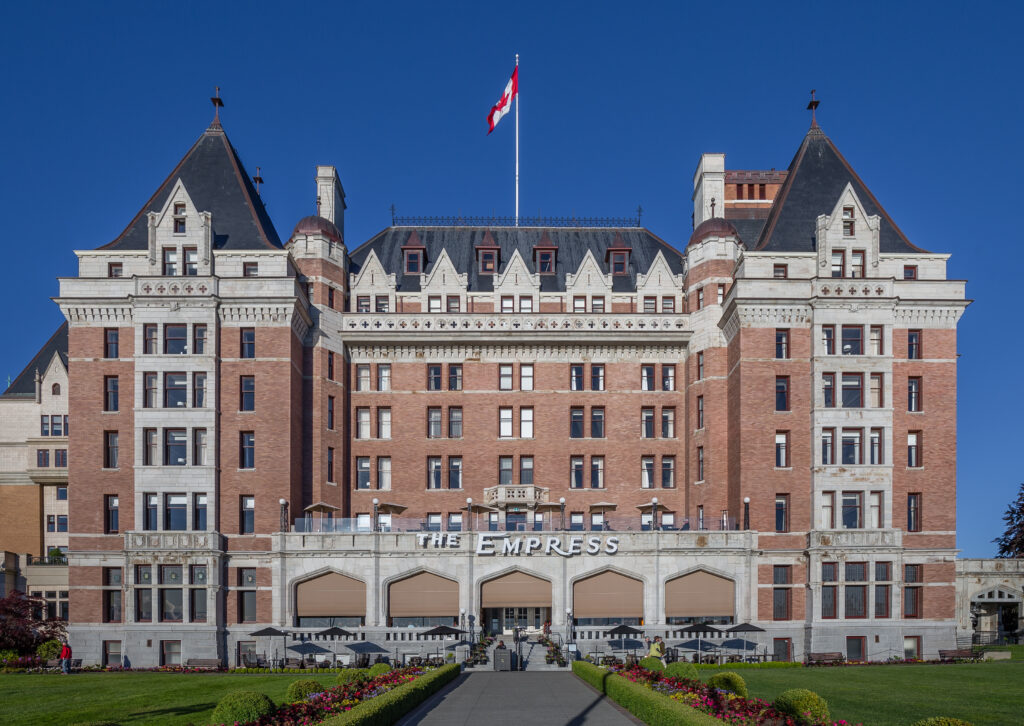
The Fairmont Empress Hotel, often referred to simply as the Empress, is one of Victoria’s most recognizable landmarks. Built between 1904 and 1908, this grand hotel was designed by the same architect as the Legislative Assembly Building – Francis Rathenbury.
The hotel was built for the Canadian Pacific Railway Company as part of a chain of luxury hotels that the company developed across Canada. Located on the shores of Victoria’s inner harbor, the hotel was designed as a symbol of luxury and comfort for wealthy travelers.
The Empress’ architectural style can be defined as château style, a variant of late Victorian architecture inspired by French Renaissance castles. This style is characterized by steep hipped roofs, tall chimneys, turrets and decorative elements.
The facade of the hotel, made of brick and finished with stone, has an asymmetrical composition with projecting risalites and bay windows. The roof is covered with green copper, which over time has acquired a characteristic patina. Stained glass windows, decorative wrought iron elements and stone carvings complete the overall impression of luxury and sophistication.
The interiors of the hotel are also in Victorian style, with plenty of dark wood, rich fabrics and classic furniture. The Empress Hotel’s afternoon tea tradition, which has been maintained since its opening, is particularly renowned and is a fine example of preserving British traditions in a Canadian context.
Despite several renovations and modernizations throughout its history, the Empress Hotel has retained its Victorian elegance and remains an important testament to the British architectural influence in Victoria.
3. Craigdarroch Castle
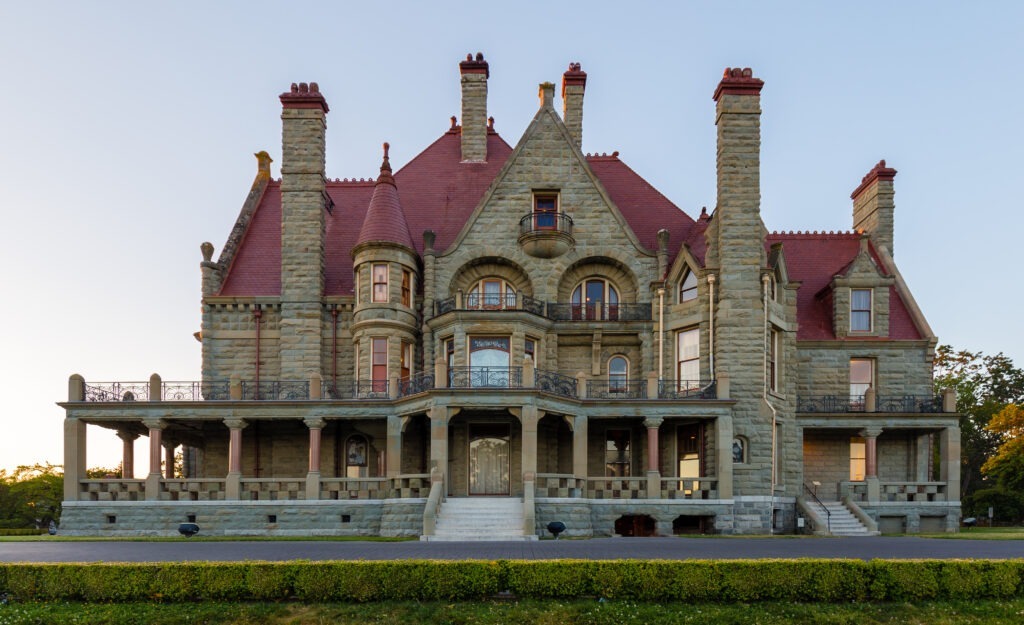
Craigdarroch Castle is a magnificent example of Victorian residential architecture and is one of Victoria’s most visited historic sites. This luxurious mansion was built between 1887 and 1890 for coal magnate Robert Dunsmuir, a Scottish immigrant who became one of the richest men in British Columbia.
The architectural style of the castle can be defined as Scottish Baronial with a strong influence of Victorian eclecticism. The building was designed by architect Warren Heaton Williams of Portland, Oregon, but many of the details reflect the owner’s Scottish ancestry.
The castle is built of sandstone and granite, with characteristic Victorian asymmetrical forms, towers of varying heights, and steep roofs. Especially impressive is the main tower, which is about 25 meters high and offers a panoramic view of the city and the Strait of Juan de Fuca.
The interiors of Craigdarroch Castle are a perfect example of Victorian luxury. There are 39 rooms decorated with exquisite wooden carvings made from imported woods including oak, yew, rosewood and mahogany. Magnificent stained glass windows, including the work of the famous New York firm Tiffany & Co. create stunning lighting effects in the interiors.
Of special note are the four carved oak fireplaces imported from Chicago and the magnificent central staircase made of solid oak. The total square footage of the chateau is over 2,000 square feet, making it the largest private home in Western Canada at the time of its completion.
Sadly, Robert Dunsmuir died in 1889, before construction was completed, and never lived at the castle. His widow, Joan Dunsmuir, resided there until her death in 1908. After that, the castle’s history was quite turbulent: it was used as a military hospital, a music conservatory, Victoria College and a school district administration building before becoming a museum in 1979.
Today, Craigdarroch Castle is a National Historic Site of Canada and functions as a museum showcasing the wealth and lifestyle of the Victorian era. Visitors can see original furniture, artwork and household items from the era, and learn about the history of the Dunsmuir family and their influence on the development of British Columbia.
4. Emily Carr House
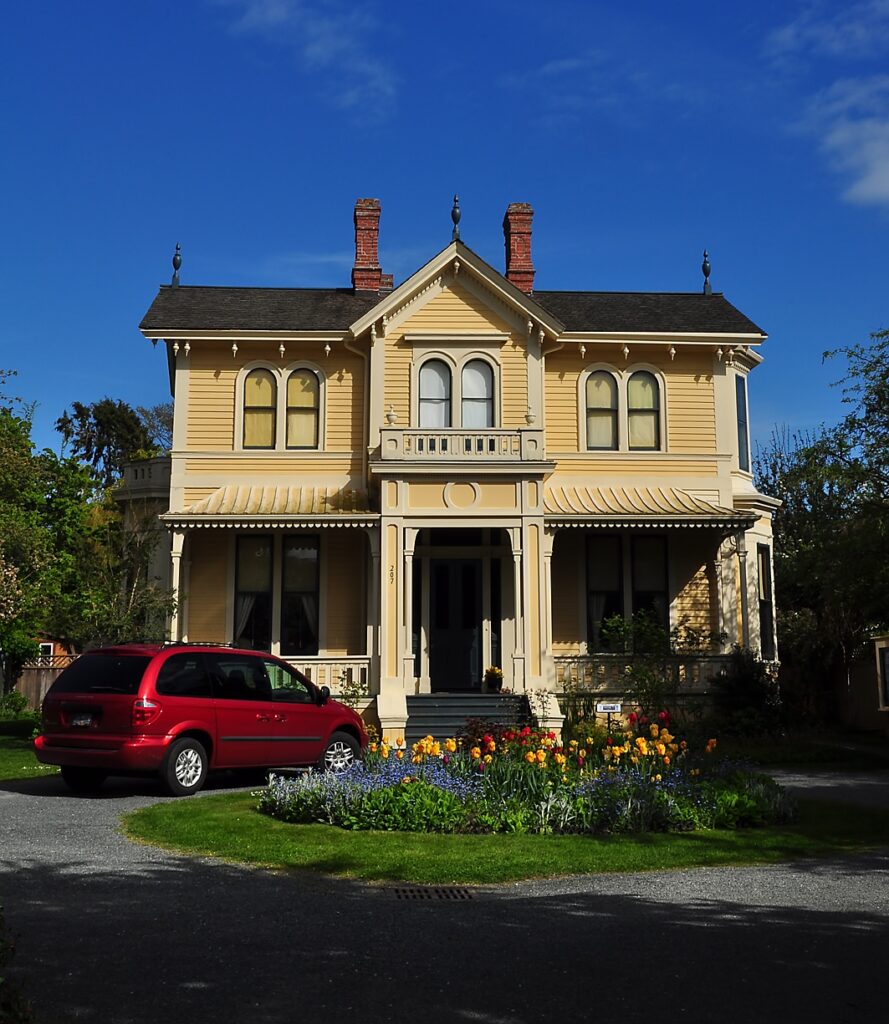
The Emily Carr House is the historic James Bay home where Emily Carr (1871-1945), one of Canada’s most famous artists and writers, was born and raised. Built in 1863 by Emily’s father, Richard Carr, the house is a fine example of early Victorian architecture in Victoria.
The architectural style of the house can be defined as Italianate, popular in North America in the 1850s and 1860s. It is a two-story building with a symmetrical façade, tall rectangular windows, and a small central porch. The building has a three-part façade arrangement with a central entrance flanked by windows and a porch that originally extended across the full width of the house.
The house is constructed of wood, which was typical of early Victorian construction when wood was a readily available and inexpensive building material. The exterior finish mimics masonry, which was a characteristic technique in Victorian architecture to give wooden buildings a more solid appearance.
The interiors of the house reflect the middle-class tastes of the Victorian era, with separate rooms for different functions, high ceilings, and relatively simple but elegant finishes. Unlike later Victorian houses, the interiors here are less ornate and more restrained.
The Emily Carr House has special cultural significance not only as an architectural monument, but also as a place associated with the life and work of one of Canada’s greatest artists. Emily Carr is known for her paintings depicting the landscapes of British Columbia and the indigenous cultures of the Pacific Northwest.
Today, Emily Carr’s home is a National Historic Landmark and functions as a museum dedicated to the artist’s life and work. The interiors have been meticulously restored to reflect the atmosphere of the 1870s when Emily was a child. Visitors can see original pieces of furniture, personal items from the Carr family, and reproductions of the artist’s work.
5. James Bay Neighborhood
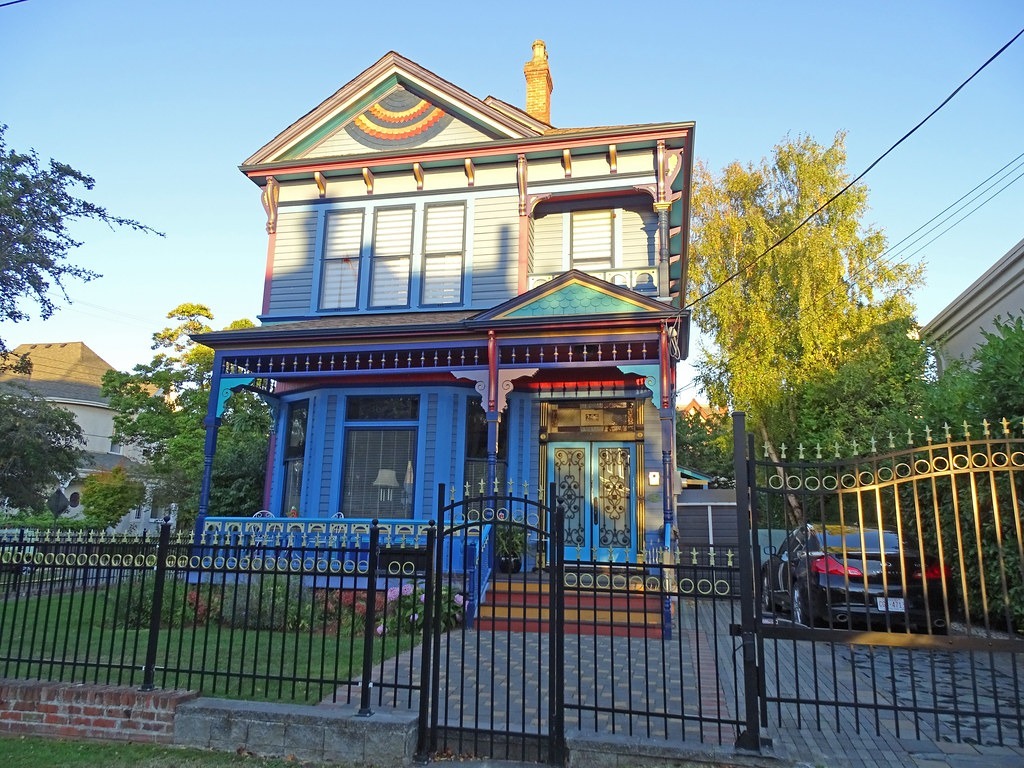
The James Bay neighborhood, just south of Victoria’s inner harbor, is one of the city’s oldest residential areas and a true treasure trove of Victorian architecture. This historic neighborhood began to develop in the 1850s and by the end of the 19th century had become a prestigious residential neighborhood with numerous Victorian homes of various styles and sizes.
A wide range of Victorian architectural styles can be found in James Bay, from modest working cottages to elegant middle-class mansions. Among the most common styles in the neighborhood are:
Italianate style – characterized by symmetrical facades, wide bracketed cornices, and often tower-like elements.
Queen Anne style – characterized by asymmetrical forms, a variety of textures, corner towers, large porches and decorative trim.
Folk Victorian – A more modest version of Victorian architecture, where simple symmetrical forms are complemented by decorative elements such as carved veranda railings and decorative elements around windows and doors.
Gothic Revival – characterized by pointed arches, steep roofs and decorative elements inspired by medieval architecture.
South Turner Street, Michigan Street, and Government Street are particularly notable for preserving entire blocks of historic Victorian homes. Many of these buildings feature bright, multi-colored paint, which sometimes makes them known as “painted ladies,” similar to San Francisco’s famous Victorian houses.
A typical Victorian house in James Bay has a planked wood frame, a steep roof, often with dormer windows, decorative gables, and a carved wood porch. Many homes retain original decorative details such as “gingerbread” ornamentation, carpenter gothic (carpenter gothic), and decorative window frames.
Today, the James Bay neighborhood is a protected historic district with strict regulations regarding the renovation and modification of historic buildings. Thanks to these preservation efforts, a stroll through the streets of James Bay allows you to immerse yourself in the Victorian era and see one of North America’s finest ensembles of residential architecture of the period.
Architectural features of Victorian Victorian buildings in Victoria
Victorian buildings in Victoria showcase many architectural features characteristic of the style, adapted to local conditions and preferences. Let’s take a look at the main architectural elements and details found in the city’s historic buildings.
Exteriors and Facades
The facades of Victorian buildings in Victoria are characterized by a variety of forms and a wealth of decorative elements. Depending on the particular style (Gothic Revival, Italianate, Queen Anne, etc.), facades can be either symmetrical or asymmetrical, but are always characterized by decorative detailing:
- Roofs and gables: Steeply pitched roofs are often complemented by decorative gables of various shapes, from simple triangular to elaborate shaped gables. Gables were often embellished with carvings or decorative elements known as “Carpenter’s Gothic”.
- Towers and turrets: Many larger Victorian houses were adorned with towers of various shapes – round, hexagonal or octagonal, with conical or hipped roofs. These elements not only gave the buildings a picturesque silhouette, but also created additional spaces inside the house.
- Porches and porches: Wide open porches were extremely popular in Victoria, where the mild climate allowed their use for most of the year. Verandahs often girded the house on two or even three sides and were decorated with carved balusters, columns and decorative friezes.
- Baywindows and projecting windows: Bay windows – projecting windows, usually multi-faceted in shape – are a feature of many Victorian Victorian houses. They not only maximized light into the interior spaces, but also created interesting architectural accents on the façade.
- Materials and textures: Although most Victorian dwellings were constructed of wood, various techniques were often used to imitate masonry. More prestigious public buildings were often constructed of imported or local stone such as sandstone, granite, and slate.
- Color scheme: Many Victorian Victorian buildings in Victoria were painted in bright contrasting colors to accentuate architectural details. This tradition is still followed today as historic buildings are restored using authentic color schemes.
Interiors and layout
The interior layout and décor of Victorian Victorian buildings in Victoria also have distinctive features:
- Room layout: The typical Victorian dwelling had a formalized layout with separate rooms for different functions. Wealthier houses may have had separate drawing rooms, dining rooms, libraries, boudoirs, smoking rooms and conservatories.
- Staircases and hallways: Central staircases were often an important decorative element in Victorian homes. In more expensive homes, staircases were made of hardwood, with carved balusters and ornately carved posts.
- Ceilings and cornices: High ceilings (often 3-4 meters) were typical of Victorian interiors. They were often decorated with molded cornices, chandelier sockets and sometimes decorative plafonds.
- Fireplaces: Decorative fireplaces were the centerpiece of many rooms. In more luxurious homes, fireplaces could be marble or of expensive woods, with elaborate carvings and mirrors above the mantelpiece.
- Windows and Lighting: Large windows provided natural light, and stained glass and colored glass were used in more expensive homes to create spectacular colored lighting. With the advent of gas lighting and later electricity, decorative fixtures were added to interiors.
- Furnishings and furniture: Wood paneling, intricately patterned wallpaper, layered curtains and an abundance of furniture were characteristic of Victorian interiors. Surfaces were often filled with decorative objects, photographs, books and collectibles.
Adaptations to the local context
Although Victorian Victorian architecture followed British patterns, it also adapted to the local context:
- Use of local materials: Local timber (especially Douglas fir and red cedar) was used extensively in construction and decoration. Local stone was often used for more prestigious buildings.
- Climatic adaptations: Due to Victoria’s mild climate, many houses had larger verandas and outdoor spaces than their British counterparts. Also less common were the massive chimneys and heating systems typical of colder regions.
- Colonial influences: Some buildings in Victoria show a mix of British Victorian styles with elements borrowed from other parts of the British Empire, especially India and the Caribbean, reflecting the colonial context of the city.
Architects and builders of Victorian Victoria
Several prominent architects and many talented builders were responsible for creating Victoria’s architectural character. Their work shaped the unique character of the city, which remains to this day.
Francis Rathenbury
Francis Mauvley Rathenbury (1867-1935) was by far the most influential architect of Victorian and Edwardian Victoria. Born in Leeds, England, Rathenbury arrived in Victoria in 1892 at the age of 25, shortly after winning a competition to design the new British Columbia Legislative Assembly building.
This success launched an illustrious career during which Ratenbury designed many landmark buildings in Victoria and other British Columbia cities. His major works in Victoria, in addition to the Legislative Assembly, include:
- The Empress Hotel (1904-1908)
- The former Post Office and Customs Building (now the British Columbia Maritime Museum) (1898)
- Crystal Garden (1925)
- Alexandra Victoria Memorial Arch in Beacon Hill Park (1908)
Rattenbury’s architectural style evolved over time, but always reflected the thoroughness and monumentality characteristic of late Victorian and Edwardian architecture. He skillfully utilized local materials and adapted British architectural traditions to the Canadian context.
Rathenbury’s tragic death (he was murdered in England in a scandalous crime of passion) added a dramatic dimension to his legacy, but his architectural achievements remain one of the most significant contributions to the face of Victoria.
Thomas Hooper
Thomas Hooper (1857-1935) was another significant architect working in Victoria during the late Victorian era. Born in England, Hooper arrived in Canada in 1871 and, after a period of work in Eastern Canada, moved to Victoria in 1886.
Hooper designed many important buildings in the city including:
- Crystal Palace (Crystal Palace) on Douglas Street (1887)
- Five Sisters Block (1889, not extant)
- Vernon Block (1888)
- Numerous private residences in the Queen Anne style
Hooper’s architectural style was characterized by attention to detail and elegance of proportion. He skillfully combined elements of various Victorian styles to create harmonious and functional buildings.
John Teague
John Teague (1833-1902) was one of the first professional architects to work in Victoria. Born in Cornwall, England, Teague arrived in Victoria in 1860 and pioneered professional architecture in the young colony.
Teague’s works include:
- First St. John’s Church (1861)
- Bank of British Columbia Building (1862)
- Angel School (1865)
- Several private residences of the early Victorian period
Teague’s architectural style was closer to the early Victorian tradition, with more restrained and classical proportions than those of later Victorian architects.
Local builders and craftsmen
In addition to renowned architects, local builders and craftsmen played an important role in shaping Victoria’s architectural character. Many were immigrants from Britain, bringing traditional building skills with them and adapting them to local conditions and materials.
Building contractors such as Charles Hayward, Thomas Catterall and George Mesker realized many projects in the city, often adding their own interpretations of architectural details.
Master woodcarvers, blacksmiths, and glaziers played a special role in creating decorative elements characteristic of Victorian architecture. Many of these details were handcrafted by local artisans, although with the development of transportation and industrial production, more decorative elements were imported from other parts of Canada or from the United States.
Preservation and restoration of Victorian heritage
The preservation of Victoria’s rich Victorian architectural heritage is the result of many years of effort by the local community, government and heritage organizations. The history of these efforts reflects changing attitudes towards historic buildings and cultural heritage in general.
Early preservation efforts
In the first half of the 20th century, many Victorian buildings in Victoria, as in many other cities, were considered outdated and of little value. Some landmark buildings were demolished to make way for new development. However, as early as the 1950s, an appreciation of the value of historic architecture began to emerge.
In 1953, the Capital Regional Museum (now the Royal British Columbia Museum) was established and began documenting the city’s historic built environment. In the 1960s, early preservation activists began to oppose the demolition of historic buildings in the downtown area.
Modern preservation programs
Since the 1970s, Victoria has implemented various mechanisms to protect historic buildings:
- TheCity of Victoria Heritage Register: Established to record and categorize historic buildings according to their architectural and historical significance.
- Victoria Heritage Foundation: Established in 1983 to support the restoration and preservation of residential historic buildings through grants and advice.
- Victoria Civic Heritage Trust (Victoria Heritage Trust): Established in 1989 to support the conservation of commercial and public historic buildings.
- Heritage Conservation Areas (Heritage Conservation Areas): Designated areas of the city (such as Old Town and parts of James Bay) that have special rules to protect historic buildings.
- Heritage Grant Program: Provides financial support to owners of historic buildings for their restoration and preservation.
Technical aspects of restoration
Restoration of Victorian buildings in Victoria requires specialized knowledge and skills. Key principles include:
- Preserving authenticity: Striving to retain original materials, details and construction methods whenever possible.
- Historically accurate restoration: Where elements need to be replaced, materials and techniques appropriate to the historic period are used.
- Use of Traditional Materials: Materials such as old-growth wood, lime mortar, wrought iron, and traditional paints are used for restoration.
- Recreating lost elements: Lost architectural details are recreated based on historic photographs and documents.
- Adaptive Reuse: Historic buildings are adapted for modern use while maintaining their architectural integrity.
Successful Restoration Case Studies
There are many successful examples of restoration and adaptive reuse of Victorian buildings in Victoria:
- Craigdarroch Castle: Meticulously restored and now functions as a museum showcasing Victorian luxury.
- Emily Carr House: Restored and opened to the public as a museum dedicated to the life and work of the famous artist.
- Empress Hotel: Has undergone several extensive restorations, most recently in 2017, combining the preservation of historic elements with modern amenities.
- Market Square: Victorian commercial complex successfully adapted for modern stores, restaurants and offices.
- Numerous residential buildings in the James Bay and Fairfield neighborhoods: Many have been carefully restored by private owners with grants from the Victoria Heritage Foundation.
The economic aspect of heritage conservation
The preservation of Victorian architecture is not only culturally but also economically important to Victoria:
- Tourism: Historic buildings and districts are a major tourist attraction for the city, attracting visitors from around the world.
- Real Estate Value: Restored historic buildings often have a higher market value than comparable new construction.
- Local Identity: Victorian architecture forms the city’s unique brand, distinguishing it from other Canadian cities.
- Sustainability: Restoration and adaptation of existing buildings is often more environmentally friendly than demolition and new construction.
Because of these preservation efforts, Victoria is now considered one of the best examples of Victorian architectural preservation in North America. The city is often referred to in guidebooks as “a slice of England on Canadian soil” or “the Garden City,” attracting tourists interested in history and architecture.
Victorian architecture and modern Victoria
Victorian architectural heritage is not just a museum piece in modern Victoria – it is actively integrated into city life and continues to influence new construction and development in the city. Consider the interaction of historic heritage with contemporary urban development.
Influence on modern architecture
The Victorian architectural tradition has a marked influence on modern construction in Victoria. Many new buildings, particularly in historic districts and the city center, are designed with the context of Victorian development in mind. This manifests itself in several ways:
- Neo-Victorian architecture: Some modern buildings directly mimic Victorian styles, reproducing characteristic elements such as high gables, decorative details and color schemes, but using modern materials and techniques.
- Contextual design: Many new buildings, while not directly imitating Victorian styles, are designed to respond to the scale, rhythm and proportions of the surrounding historic buildings.
- Interpretation of tradition: Some architects create modern buildings that creativelyreinterpret elements of Victorian architecture, adapting them to modern functions and aesthetics.
- Hybrid architecture: In some historic building renovation projects, modern additions are clearly distinguished from original historic elements, creating an interesting dialog between past and present.
Urban Policy and Heritage
Victoria’s municipal government has developed a number of policies to balance historic preservation with modern development:
- Zoning and Planning: Special zoning regulations for historic districts regulate the height, massing and design of new buildings so that they harmonize with historic development.
- Design Guidelines: Detailed design guidelines provide recommendations for the restoration of historic buildings and the construction of new buildings in historic districts.
- Heritage Review Process: Proposals to modify historic buildings or construct new buildings in historic districts go through a special review process that includes a heritage impact assessment.
- Preservation Incentives: Taxincentives, grants, and technical assistance programs encourage owners to preserve historic buildings.
Tourism and Economic Significance
Victorian architecture is a key component of Victoria’s tourism appeal:
- Cultural Tourism: Historic buildings and districts attract tourists interested in architecture and history.
- Organized Tours: Numerous walking and bus tours focus on the city’s Victorian architecture.
- Festivals and Special Events: Annual events such as Roades in Bloom and Victorian Christmas celebrations attract additional visitors.
- City Branding: Marketing materials and tourism information often emphasize British heritage and Victorian architecture as unique features of the city.
Issues and Challenges
Preserving Victorian heritage in modern Victoria presents a number of challenges:
- Pressure for development: High land values and the housing crisis create pressure for higher density development, which can threaten historic buildings.
- Seismic risks: Victoria is in an area of high seismic activity and many historic buildings require costly seismic strengthening.
- Climate Change: Rising sea levels and changing climatic conditions pose new threats to the preservation of historic buildings.
- Economic factors: The high cost of restoration and maintenance of historic buildings can be an obstacle to preservation.
- Balance between preservation and renovation: Finding a balance between preserving historic authenticity and adapting buildings for modern use remains an ongoing challenge.
Public Involvement and Education
Active community involvement plays an important role in the preservation of Victoria’s Victorian heritage:
- Local preservation organizations: Organizations such as the Hallmark Heritage Society, Victoria Heritage Foundation and Old Cemeteries Society are active in documenting, protecting and promoting historic heritage.
- Educational Programs: Museums, schools, and community organizations conduct educational programs to raise awareness of the value of architectural heritage.
- Publications and Research: Academic research, books and pamphlets on Victorian Victorian architecture contribute to a better understanding and appreciation of this heritage.
- Digital initiatives: Online archives, virtual tours and social media are helping to engage new audiences in the study and appreciation of Victorian architecture.
Conclusion: A living legacy of the imperial era
Victorian architecture in Victoria represents a unique and well-preserved example of British colonial heritage on Canadian soil. From grand public buildings to charming private residences, this architectural ensemble reflects the city’s history as an important outpost of the British Empire on the Pacific coast of North America.
Victoria’s architectural identity was shaped during a period of rapid economic growth and cultural development in the second half of the 19th century. Talented architects and builders, many of them British immigrants, created in this remote corner of the Empire a vivid embodiment of British architectural traditions adapted to local conditions.
The Fairmont Empress Hotel, the British Columbia Legislative Assembly Building, Craigdarroch Castle and numerous Victorian homes in the James Bay and Fairfield neighborhoods form a unique architectural landscape that is not just a tourist attraction, but a living, functioning urban space.
Decades of dedicated effort to preserve this heritage – from the creation of a legal framework to protect historic buildings to the practical work of restoration and adaptive reuse – have made Victoria one of the best examples of Victorian architectural preservation in North America.
In the modern context, Victorian architectural heritage continues to play an important role in shaping Victoria’s urban identity, influencing new construction and defining the character of the urban environment. The balance between preserving historic authenticity and adapting to modern needs remains a key issue for the future development of the city.
Victoria, with its “most British character” among Canadian cities, continues to cherish its Victorian heritage while evolving as a modern, dynamic twenty-first century city. In this symbiosis of past and present lies the unique character of this charming city on Canada’s Pacific coast.
Victoria’s Victorian architecture is not just a collection of old buildings; it is a living testament to the history, culture and identity of a city named after a queen whose reign defined an era. This legacy continues to inspire new generations of architects, restorers and residents, reminding us of the complex ties between Canada and Britain, the period of colonial expansion and the cultural exchange that shaped the unique character of this Pacific city.
Author Information

I’m a journalist specializing in urban issues and city politics in the Vancouver region, which I’ve covered since 1994, and I also have a strong focus on the iGaming industry. In this endlessly changing city, I cover a broad range of issues: from drug policy, bike lanes, billion-dollar development projects, homelessness, and garbage debates, to the rapidly evolving world of online gaming, including regulatory landscapes, technological advancements, and market trends. I write frequently for the Globe and Mail’s B.C. section and Report on Business. From 2008 to 2015, I had a regular column in Vancouver magazine, “Urban Fix,” which apparently resonated with readers so much that it earned me a few regional and national awards.