

Introduction
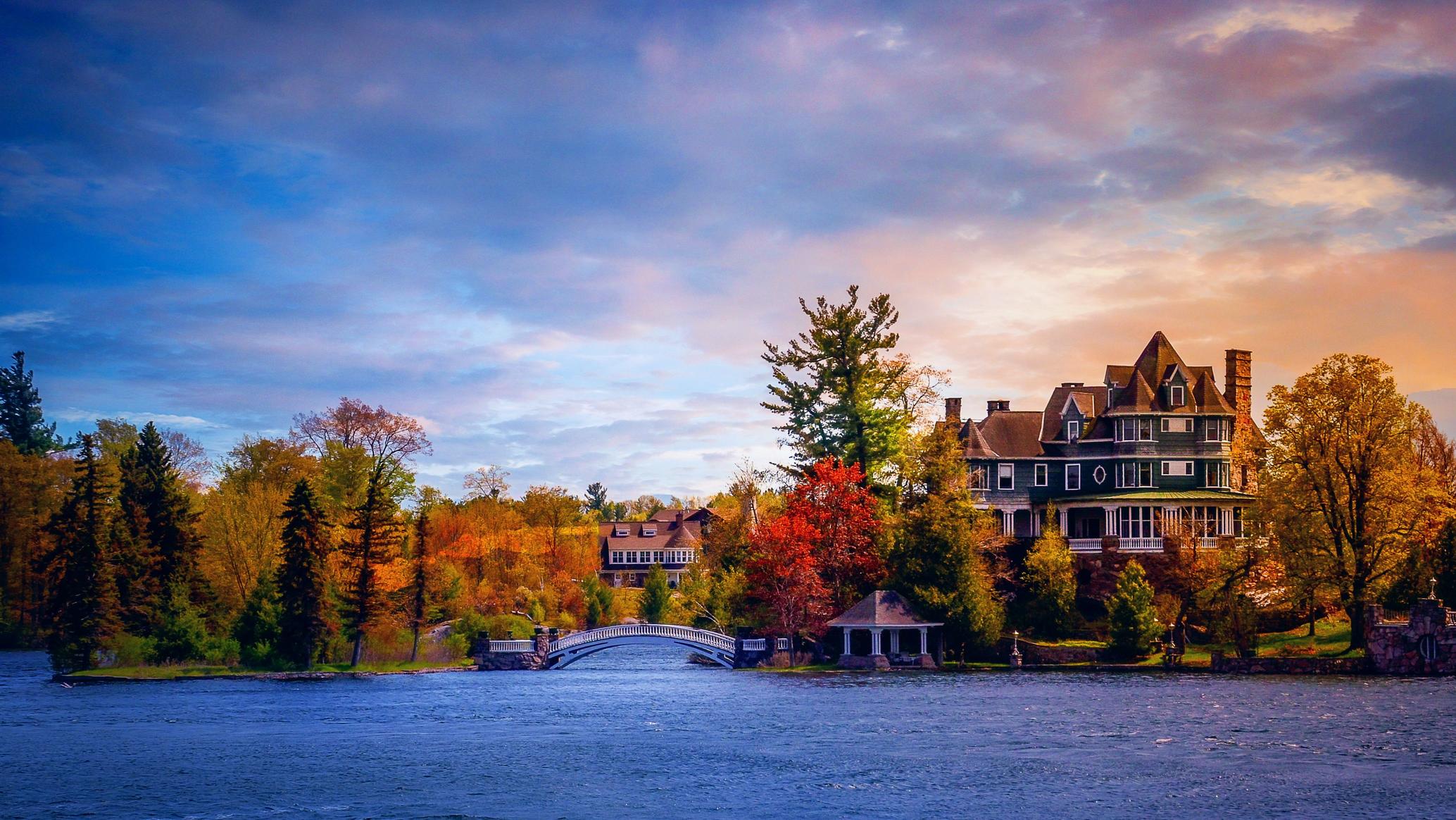
On the border of the two North American powers, Canada and the United States, lies an amazing archipelago called the Thousand Islands. Despite its poetic name, the archipelago actually comprises 1,864 islands of various sizes. This natural phenomenon is located along the St. Lawrence River, where it originates from the northeast corner of Lake Ontario. The archipelago extends about 80 kilometers downstream from the city of Kingston, Ontario, dividing its territory between Canada and the United States.
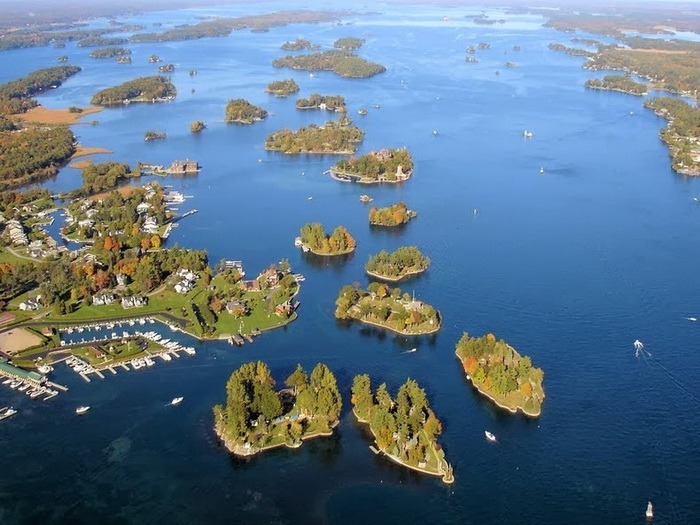
Imagine: hundreds of small and large islands scattered across the river like emeralds on blue velvet. Some are the size of a soccer field, others are so small that they contain only one house and a small garden. Together they create a unique landscape that has fascinated travelers and inspired artists, writers and photographers for centuries.
The Thousand Islands is more than just a geographical landmark. It is a place where history and nature, tradition and modernity, two states and many human destinies intertwine. Traveling through this archipelago is an opportunity to touch the unique ecosystem, to see luxurious castles and modest fishermen’s huts, to learn fascinating stories and legends, to hear the splash of waves and the cries of seagulls over the water surface.
Geographical position and features
The archipelago of the Thousand Islands is located on the border of the United States and Canada along the St. Lawrence River, in the place of its source from Lake Ontario. Administratively, the Canadian portion of the islands belongs to the province of Ontario, while the American portion belongs to the state of New York. According to the official definition, to be considered an island in the archipelago, a piece of land must be above the water level year-round and have at least one tree growing on it.
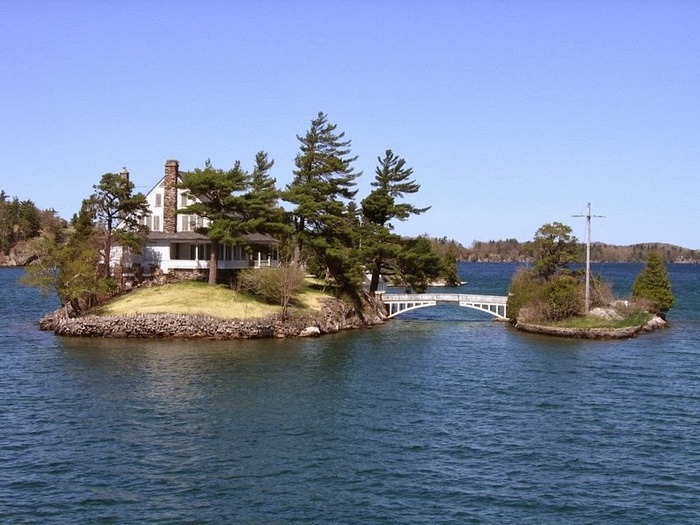
The islands range in size from large, with an area of more than 100 square kilometers, to tiny, barely exceeding one square foot (0.093 square meters). The largest island in the archipelago, Wolfe Island, has an area of about 124 square kilometers and a permanent population of about 1,400. It is 29 kilometers long and 9 kilometers wide.
Geologically, most of the islands in the archipelago were formed where a branch of the Canadian Shield, known as the Frontenac Arch region, runs south across the river and joins the Adirondack Mountains. This area was recognized by UNESCO as a biosphere reserve in 2002.
The hydrology of the archipelago presents an interesting mix of different depths. In some places, a vessel less than 8 meters from shore can find itself over 60 meters deep. Conversely, rocks and shoals less than 60 centimeters below the water surface can be found in the middle of relatively deep areas. Because of the large number of rocks and shoals just above or below the water surface, navigation outside of marked channels at night can be hazardous.
Prior to the introduction of striped dreissena (or zebra mussel, as it is also known) into the waters of the archipelago, visibility was typically between 3 and 4.5 meters, decreasing slightly over time. Water clarity improved markedly in the mid-1990s with the introduction of these algae-eating clams. The water is so clear in some areas that the rocky bottom can be seen at a depth of 24 meters.
History of the archipelago
Prehistoric period and the first inhabitants
The history of the Thousand Islands dates back thousands of years. According to research, the archipelago formed about 12,000 years ago at the end of the last ice age. The formation of the islands was influenced by three previous ice ages that helped create a geologic bridge between the Canadian Shield in the north and the Adirondack Mountains in southern New York State.
The first humans came to the region about 7,000 years ago. Between 700 B.C. and 1600 A.D., the archipelago was one of the staging grounds of North American Indians from the Iroquois and Ojibwa tribes, who called these islands Manitouan or “Garden of the Great Spirit.” Six Iroquoian tribes, the Onondaga, Seneca, Cayuga, Iroquois, Tuscarrora, and Oneida, formed a confederacy here.
European discovery and colonization
Europeans learned of these places thanks to French explorer Jacques Cartier, who discovered the St. Lawrence River on August 10, 1535. Early explorers used the river as a highway leading deep into Canada and the United States. The first reliable maps of the region were made in 1687 by Jean Debet, who named the archipelago Les Milles îles, which means “The Thousand Islands” in French.
During the 17th and 18th centuries, the archipelago witnessed many military actions. The St. Lawrence River served as an important transportation artery during the French-English War of 1754-1759, the U.S. War of Independence and the Anglo-American War of 1812. The region is dotted with forts and fortifications reminiscent of a turbulent past.
European settlement of the islands began in 1783 with the arrival of Loyalists who moved from the United States after the American War of Independence to remain loyal to the British crown. The Loyalists were soon joined by Europeans, mostly English, Scots, Irish, and Germans.
In 1816, British hydrographer Captain William Fitzwilliam Owen completed a survey of the islands, naming more than 1,800 of them. He created 8 island groups, among which the Admiralty Group with 64 islands, named in honor of the British Lords of the Admiralty, stands out.
The Golden Age of the Thousand Islands
In the late 19th and early 20th centuries, the Thousand Islands experienced its golden age. This period was the heyday of tourism and the construction of luxury mansions. Wealthy families from New York, Chicago, Cleveland, Pittsburgh and other large cities of the United States and Canada loved the archipelago as a place for summer vacation. Comfortable hotels were built here, and guests were offered steamboat rides and other entertainment.
The islands’ accessibility and proximity to thriving cities made them a popular destination for the elite of the time. Dozens of trains carrying wealthy tourists arrived every day from the United States and Canada. During this period, many luxurious homes and mansions were built on the islands, some of which have survived to this day.
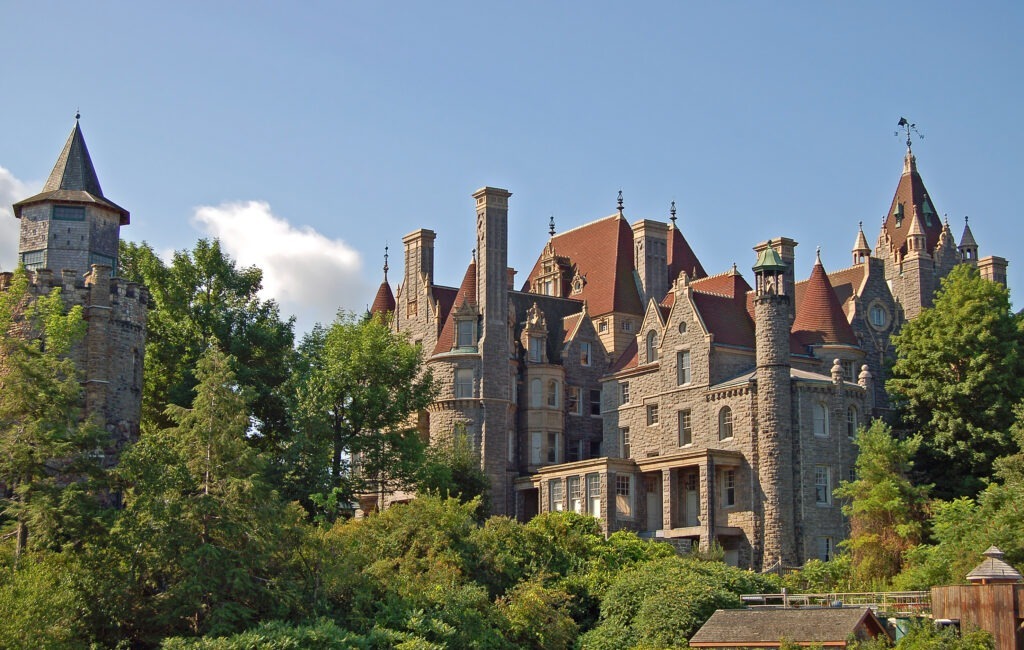
The most famous of these was Boldt Castle, built by George Boldt, owner of the Waldorf Astoria Hotel in New York. Other famous inhabitants of the archipelago included the inventor of the Pullman railroad car, New York financier John Jacob Astor, and famous cosmetic product creator Helen Rubinstein.
The Golden Age of the Thousand Islands ended with the onset of the Great Depression and the spread of automobile transportation, which changed travel patterns and made resort destinations more accessible to the general public.
Nature and ecology of the archipelago
Flora and fauna
The nature of the Thousand Islands is typical of the Ontario region and northern New York, but has a few unique features. There are deer, special varieties of blueberries and resinous pine. The latter was especially prized in the past for its resin’s ability to withstand alternate soaking and drying, making it indispensable for making waterwheels for mills and sluices.
There is no permanent bird population on the islands, but the region is an important stopover for migrating waterfowl, ducks, Canada geese and loons. Birdwatching enthusiasts will be interested to know that three nearly extinct species – wild turkeys, ospreys and white-headed eagles – have reappeared in the region in recent decades.
The archipelago is famous for its rich fish population and has attracted fishermen for over a hundred years. The local waters are home to pike, sturgeon (this ancient fish species, which had inhabited the river since the end of the Ice Age, was once thought to have disappeared, but a small population was discovered in 1994) and other fish species.
Forests play a special role in the ecology of the archipelago. Canada was once an important source of timber for Britain. With the advent of the steamboat era, deforestation was rampant. Fortunately, there was a rule that only half of the trees on the island could be cut down. Over time, the trees grew back and the islands returned to their original state.
Ecological importance and nature conservation
In 2002, the archipelago was recognized as a UNESCO Biosphere Reserve as part of the Frontenac Arch Biosphere. This recognition highlights the uniqueness and value of the natural ecosystems of the Thousand Islands.
A group of 21 islands form Thousand Islands National Park, Canada’s oldest national park east of the Rocky Mountains. The park offers campgrounds, hiking trails, family activities and is home to a national historic building.
In the United States, thirty New York State Parks are managed as part of the Thousand Islands Region. Many of these river parks were established in the late nineteenth and early twentieth centuries as part of the St. Lawrence Reservation and were among the earliest land acquisitions by New York State for conservation and recreational development.
Unique Islands and Attractions
The most famous islands are
The Thousand Islands Archipelago has many interesting and unique islands, each with its own history and features. The largest island is Wolfe Island, which is wholly owned by Canada. Other large islands include the American Grindstone Island and Wellesley Island, as well as Canada’s Howe Island.
Next to Wolfe Island, but on U.S. territory, is Carleton Island, with the ruins of Fort Haldimand, built by the British in 1779 during the American Revolutionary War. The island was captured by three American soldiers during the Anglo-American War of 1812 and has remained part of the United States ever since.
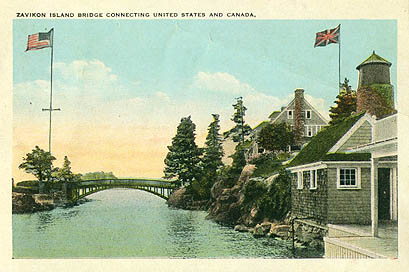
One interesting attraction is a pair of islands southwest of Grenadier Island, collectively called Zavikon Island. There is a popular but incorrect claim that the larger of these islands is in Canada and the smaller is in the United States, and the footbridge between them is the shortest international bridge in the world. In fact, both islands are entirely within Canada and belong to the municipality of Leeds and Grenville.
Longue Vue Island is the only man-made island in the archipelago.
Ironsides Island is known as home to one of the largest nesting grounds for great blue herons in upstate New York, where more than a thousand herons return to breed each April. The uninhabited rocky island near Alexandria Bay is owned by The Nature Conservancy and was listed as a National Natural Landmark in 1967.
Boldt Castle and other historic structures
One of the main attractions of the archipelago is Boldt Castle, located on Heart Island. This majestic castle was commissioned by George Boldt, owner of the Waldorf-Astoria Hotel in New York, in 1900 as an expression of his love for his wife Louise. Construction was well underway, but was abruptly halted in 1904 after Louise’s death. Boldt never returned to the island again, and the castle remained abandoned for more than 70 years until the Thousand Islands Bridge Authority purchased it in 1977 and began restoring it according to Boldt’s original plan.
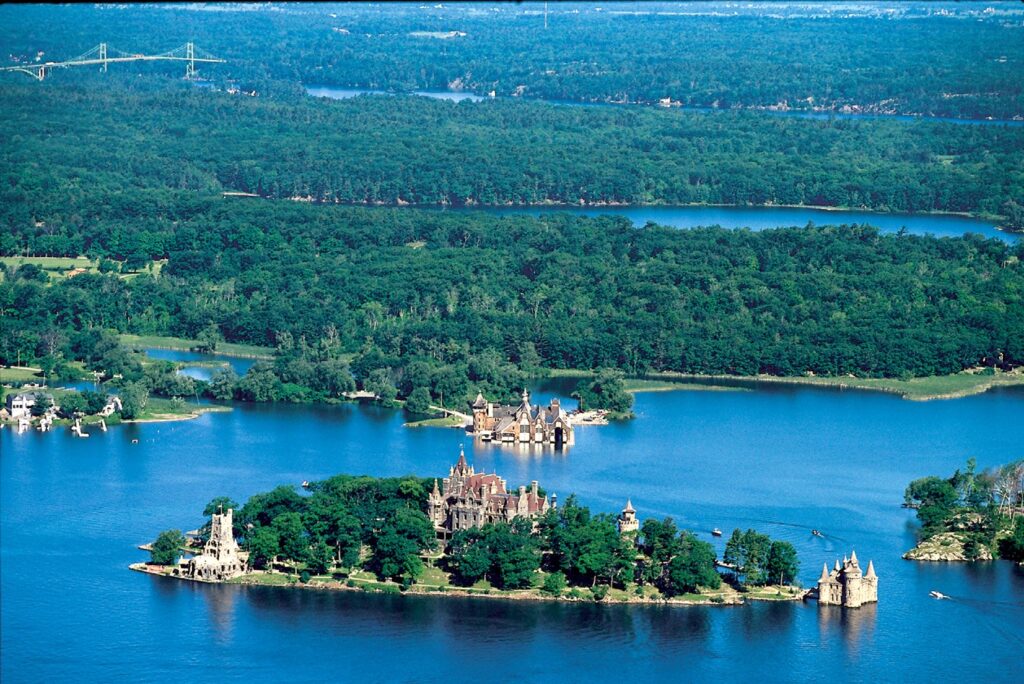
Another notable historic building is Singer’s Castle, also known as “The Towers,” located on Dark Island. This castle was built by Frederick Bourne, head of the Singer Sewing Machine Company, in the early 20th century. The castle was designed with secret passageways and hidden wine cellars, allowing the host to peek at his guests while hiding his liquor supply during the Prohibition era.
Just Room Enough Island is the smallest inhabited island in the archipelago
Among the many islands in the archipelago, a tiny island with the telling name “Just Room Enough” stands out. This tiny island is considered to be the smallest inhabited island in the world. It has just one house with a small yard occupying almost all of the available space.
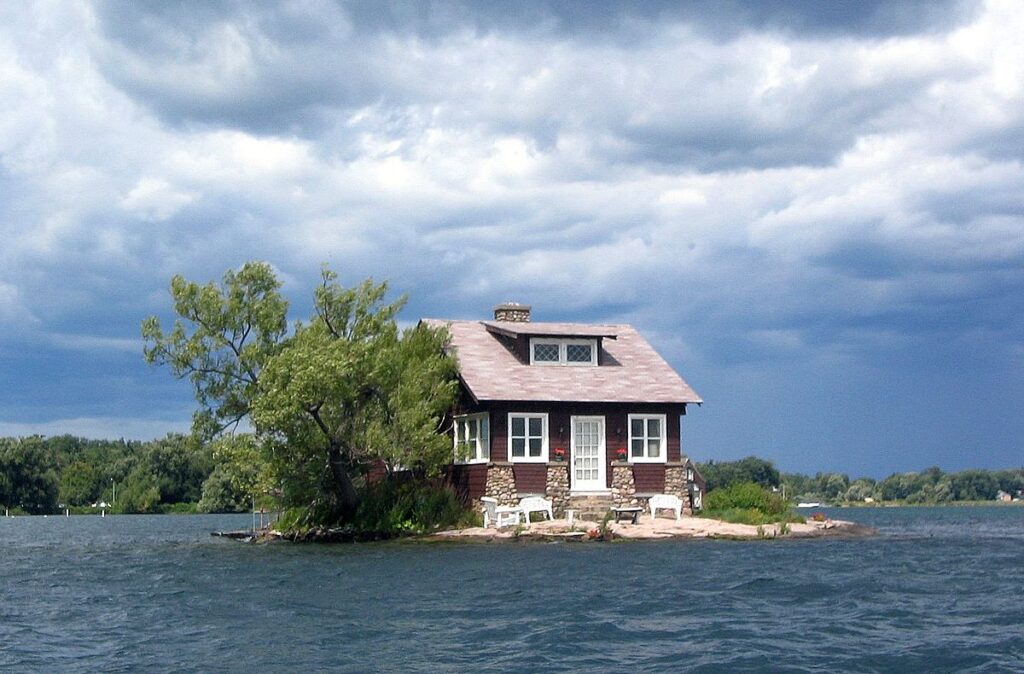
The island was purchased by the Sizeland family in the 1950s, who built a house there hoping for privacy. Their plan didn’t quite work out, however, as the tiny island with the house has become one of the archipelago’s main tourist attractions. At high tide, the water comes right up to the walls of the house, creating the illusion that the building is floating on the surface of the river.
Tourism and recreation in the Thousand Islands region
Water activities and cruises
Water tourism is one of the main attractions in the Thousand Islands region. Many companies offer cruises of varying lengths, from hour-long cruises to full-day excursions visiting major attractions.
Especially popular are cruises with a visit to Boldt Castle and Singer’s Castle. Such excursions allow you not only to see these historic buildings from the inside, but also to enjoy the picturesque views of the archipelago from the water.
The Thousand Islands has long been a center of recreational shipping. In the late 19th and early 20th centuries, large steam yachts were popular here, many of which were designed by the famous American shipbuilder Nathaniel Herreshoff. The region was also famous for pioneering powerboats. Three local yacht clubs hosted the American Powerboat Association’s Gold Cup races for nine consecutive years.
Fishing and diving
Fishing is one of the most popular activities in the Thousand Islands region. These waters are rich in a variety of fish species including bass, walleye, pike and muskellunge (a subspecies of pike). Local guides offer fishing tours with all necessary equipment provided.
The archipelago also provides excellent diving opportunities. The waters of the Thousand Islands contain many shipwrecks, some of which lie more than 30 meters deep, while others are only 4.5 meters below the surface and are visible from the water. Famous dive sites include the America, Islander and Keystorm wrecks. There are sites for divers of all skill levels.
National Park and Hiking Trails
Thousand Islands National Park offers many opportunities for outdoor activities. There are hiking trails of varying difficulty, campgrounds and picnic areas. The park organizes various activities for the whole family, especially in the summer season.
One of the popular places for swimming and anchoring is Potter Beach on the American island of Grindstone. It has a shallow sandy bottom with a very gradual descent, making it ideal for families with children. There are also trails that start from the beach and run throughout Grindstone Island.
Another popular spot is Lake of the Isles, a secluded area cut off from the rest of the St. Lawrence River by Wellesley Island and neighboring Canadian Hill Island. Access to the lake is limited to two narrow passages, one that skirts the northeastern tip of the island and the other that passes through the International Divide, a narrow, shallow, winding channel that leads to the north side of the island, passing directly under the customs bridge.
Practical information for travelers
How to get to the Thousand Islands
There are various ways to get to the Thousand Islands region, depending on whether you plan to start your journey from the Canadian or American side.
Air Transportation: The closest airports with passenger service are located in both Ontario and New York. Watertown International Airport (ART) in Watertown, New York, offers daily American Airlines flights with a connection in Philadelphia. Norman Rogers Airport (YGK) in Kingston, Ontario, offers FlyGTA flights with a connection at Toronto’s Billy Bishop Metropolitan Airport, as well as flights from Montreal-Trudeau International Airport via Pascan Aviation. Both airports also provide private aviation services.
Road Transportation: From the U.S., the region is accessible via Interstate 81, which passes through Watertown and connects to the Thousand Islands Bridge into Canada. From Canada, major roads leading to the archipelago include Highway 401, which runs along the St. Lawrence River, and Highway 137, which connects to the Thousand Islands Bridge.
Thousand Islands Bridge: Connects New York and Ontario by passing through Wellesley Island at the northernmost point of Interstate 81 in Jefferson County and meeting Highway 137, which leads to Highway 401. Pedestrians may cross the Canadian span of the bridge on the sidewalk on the west side (near the southbound lanes). The passage is only open during daylight hours unless otherwise noted.
Best time to visit
The best time to visit the Thousand Islands Archipelago is from late May through early October. During this period, the weather is warm and the tourist infrastructure is fully operational.
It is especially recommended to visit in July and August, when the air temperature stays within 22-28 degrees Celsius, and the water temperature reaches comfortable for swimming 20-24 degrees.
September and early October are also good for visiting, especially for those who prefer fewer tourists and like to observe the autumn color change of foliage, which in this region is especially picturesque.
In winter, many tourist sites are closed, and some islands can only be reached by ice on snowmobiles or airsleds.
Where to stay and what to try
Lodging: The Thousand Islands region offers a wide range of accommodation options, from luxury hotels and resorts to cozy guesthouses and campsites. During high season, it is recommended to book accommodation in advance.
On the Canadian side, popular places to stay are Kingston, Brockville and Gananoque, where you can find hotels of different price categories. In the USA, the main tourist centers are Alexandria Bay, Clayton and Cape Vincent.
Outdoor enthusiasts should pay attention to camping in Wellesley Island State Park in New York and in the Thousand Islands National Park in Canada.
Cuisine and local specialties: The Thousand Islands region is famous for its seafood and fish dishes, especially freshly caught fish from the St. Lawrence River.
Not to be overlooked is the famous Thousand Island salad dressing, which, according to one story, was invented in the region. According to the story, the dressing was created by fishing guide’s wife Sophia LaLonde as part of a shore dinner prepared by her husband George. Actress Mae Irwin, after trying the dressing, asked for the recipe and then gave it to George Boldt, who was the owner of the Waldorf-Astoria Hotel in New York City. Boldt instructed the hotel’s maitre d’, Oscar Chirky, to put the sauce on the restaurant’s menu in 1894. This is how the sauce gained widespread popularity.
Cultural characteristics and legends
Folklore and myths of the archipelago
There are many legends and myths associated with the Thousand Islands archipelago. According to one legend, the supreme Indian god was saddened by the strife between people and decided to descend to earth. He scattered peaceful lands in the form of a thousand islands as a gift to the people so that they could live in harmony with nature and each other.
Another legend tells of a love affair between a young Indian warrior and the daughter of a chief. When the chief forbade them to be together, the lovers escaped on a boat, but got caught in a violent storm. Their boat crashed on the rocks and their souls became thousands of islands so that they could always be together, but never fully united.
A connection to literature and art
O boating on the rivers, Traveling down the St. Lawrence River, splendid scenery, Steamboats, Ships cruising, A thousand islands, an occasional raft of logs And rafters with long oars-oars, Little huts on the rafts And trickles of smoke as they Cook dinner in the evening.
This passage from the poetry of Walt Whitman perfectly captures the atmosphere of the archipelago and life on the St. Lawrence River in the nineteenth century.
The Thousand Islands have also been reflected in modern culture. The archipelago is a popular setting for novels and movies, with authors using the region’s unique landscapes and historical past to create atmospheric works.
Artists, photographers and illustrators often turn to the Thousand Islands theme, capturing picturesque vistas, ancient castles and cozy homes on small islets. These images can be found in galleries and museums in both Canada and the United States.
Modern life on the islands
Permanent residents and their everyday life
Although most of the islands in the archipelago are uninhabited or used only during the summer, some have permanent populations. The largest permanent settlement is on Wolfe Island, where about 1,400 people live. Howe and Wellesley Islands also have permanent residents.
Life on the islands has its own peculiarities. Most of the islands are electrified and have telephone service, which is carried by submarine cables. The larger islands have fresh water wells, while the smaller islands take water directly from the St. Lawrence River using filtration and chlorination systems.
In winter, the river freezes over completely in some places, causing some difficulties for the locals. Those who live on the islands year-round use snowmobiles and airsleds to navigate the frozen river. Downstream near the Thousand Islands Bridge, however, the current is much faster and the river stays open all winter.
Economy and development of the region
The economy of the Thousand Islands region relies heavily on tourism, especially during the summer season. A lot of tourists come here to visit historical sites, enjoy water sports, fishing, diving and hiking.
In addition to tourism, agriculture plays an important role in the economy, especially on the larger islands such as Wolfe and Howe. Farms are located here, some of which have been owned by the same families for generations.
Shipping also plays an important role in the region’s economy. The St. Lawrence Seaway, an important transportation corridor linking the Great Lakes to the Atlantic Ocean, passes through the Thousand Islands. Various cargoes are transported along this route on large cargo ships such as the Seawaymax.
As with other scenic locations in North America, real estate on the islands is becoming increasingly valuable. Small islands with homes can cost anywhere from a few hundred thousand to several million dollars, depending on the size, location and condition of the property.
Interesting facts about the Thousand Islands
- Island Definition: To be considered one of the Thousand Islands, a parcel of land must be above water year-round and have at least two living trees growing on it. The minimum size of an island is 0.1 m² (one square foot).
- International Bridge: The Thousand Islands Bridge connects the U.S. state of New York and the Canadian province of Ontario, passing over Wellesley Island at the northern point of Interstate 81.
- Biosphere Reserve: In 2002, the Thousand Islands region was recognized as a UNESCO Biosphere Reserve as part of the Frontenac Arch Biosphere.
- Famous Sauce: The world-famous Thousand Island sauce was actually invented in the region in the late 19th century and became famous when it was included on the menu of New York’s Waldorf-Astoria Hotel.
- Shipwrecks: There are several shipwrecks in the waters of the archipelago that attract diving enthusiasts from all over the world. Among them are the America, Islander and Keystorm.
- Secret Society Island: Deer Island, about two miles north of Alexandria Bay, is owned by the Skull and Bones secret society from Yale University.
- Improved water clarity: Since the introduction of striped dreissena (zebra mussel), which feeds on algae, in the 1990s, water clarity in the archipelago has improved dramatically. In some places, the rocky bottom can be seen at depths of up to 24 meters.
Conclusion
The Thousand Islands is a unique place where natural beauty is combined with a rich history and cultural heritage. This archipelago, divided between two countries, has managed to retain its charm over the centuries, attracting travelers with its picturesque landscapes, historical sites and diverse recreational opportunities.
From grand castles built by Gilded Age magnates to tiny lonely house islands; from deep waters with shipwrecks to shallow coves with sandy beaches, the Thousand Islands offer a multitude of experiences for a variety of travelers.
The history of the region is closely tied to the history of North America itself. Important events of the U.S. War of Independence and the Anglo-American War of 1812 took place here. Then came an era of luxury and prosperity, when the richest families on the continent built their summer residences here. Today, the Thousand Islands is a place where you can forget about the hustle and bustle of the modern world and enjoy the harmony of nature and cultural heritage.
Whether you come here for one day or for the whole summer, the Thousand Islands archipelago will leave unforgettable impressions and the desire to return again and again to discover new corners of this amazing corner on the border of Canada and the United States.
Even in today’s technological and comfortable world, the Thousand Islands continue to enchant travelers with their unspoiled beauty and serene atmosphere, reminding us of eternal values and the need to preserve such unique natural and cultural treasures for future generations.
Author Information

I’m a journalist specializing in urban issues and city politics in the Vancouver region, which I’ve covered since 1994, and I also have a strong focus on the iGaming industry. In this endlessly changing city, I cover a broad range of issues: from drug policy, bike lanes, billion-dollar development projects, homelessness, and garbage debates, to the rapidly evolving world of online gaming, including regulatory landscapes, technological advancements, and market trends. I write frequently for the Globe and Mail’s B.C. section and Report on Business. From 2008 to 2015, I had a regular column in Vancouver magazine, “Urban Fix,” which apparently resonated with readers so much that it earned me a few regional and national awards.